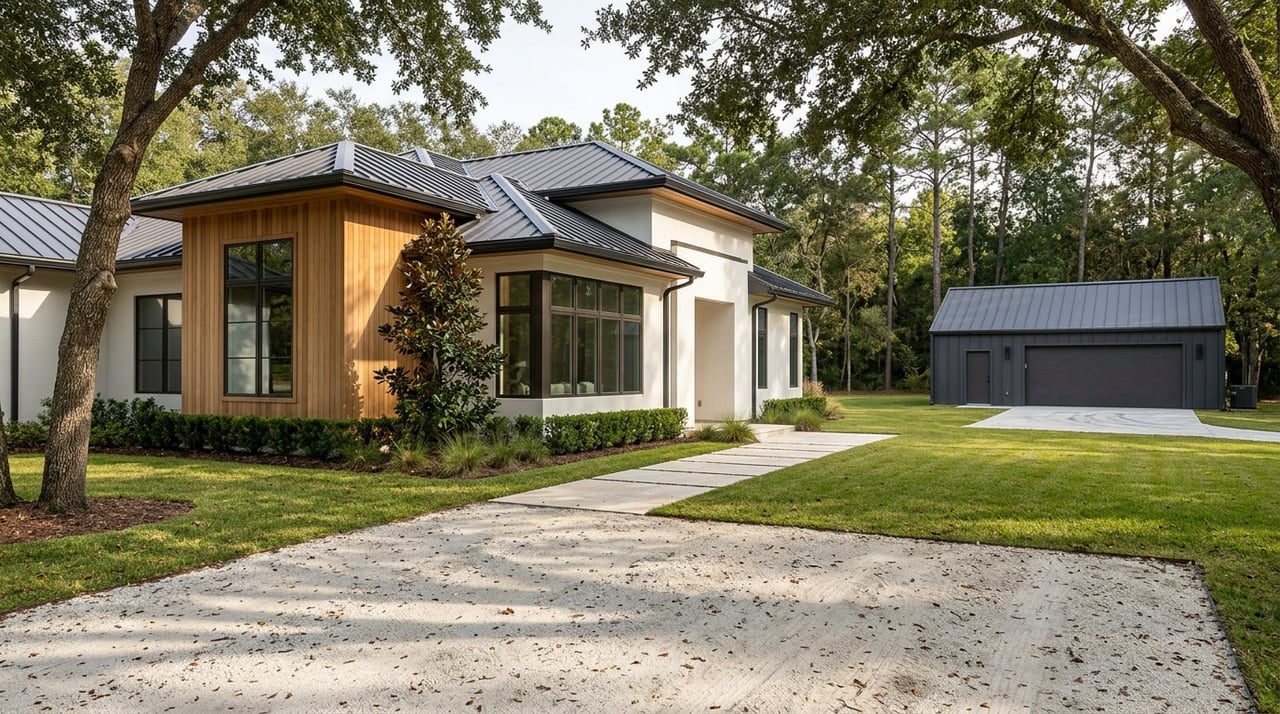
If you are shopping for a small ranch or acreage property near Conroe, you are not just buying more land. You are buying a property with its own rules, systems, and due diligence needs. That can feel exciting and a little overwhelming at the same time, especially if you are moving from a typical subdivision lot. In this guide, you will learn the key issues to verify before you make an offer so you can move forward with more confidence. Let’s dive in.
Why acreage buying is different
A small ranch or acreage property near Conroe usually involves more site-specific review than a home in a standard neighborhood. The parcel itself may have a different legal description, separate utility setup, and more detailed access questions that affect how you use the land.
The City of Conroe states that it does not have a formal zoning ordinance and does not regulate land use in the way many buyers expect. Still, construction and site improvements are governed by adopted codes and ordinances. The city also notes that annexation can add services like police, fire, trash collection, and code enforcement, even though annexation does not change the address or school district.
In Montgomery County, the development permit packet asks for either a recorded plat or a metes-and-bounds description and survey. That is a useful reminder that acreage properties often depend on precise surveys, legal descriptions, and site layout details.
Start with the survey and legal description
Before you fall in love with the trees, barn, or extra space, make sure you understand exactly what is being sold. On acreage properties, boundaries, easements, and road frontage can matter just as much as the home itself.
Montgomery County’s permit materials highlight the importance of a recorded plat or written metes-and-bounds description. If the tract is not part of a typical subdivision, you will want to review the survey carefully and make sure the legal description matches the property you expect to buy.
This step also helps you plan for future improvements. If you want to add a shop, guest house, driveway, fencing, or other structures later, the survey and site plan become even more important.
Check water service early
One of the biggest mistakes acreage buyers make is assuming water service works the same way it does in town. It often does not.
Montgomery County permit forms show that water service may be a private well, a water district, or another system. In other words, you should not assume municipal water is available just because a property is close to Conroe or Montgomery.
If the property has a private well, the Texas Water Development Board says private well owners are responsible for water quality. It recommends obtaining the well report when evaluating a property with a private well. In Montgomery County, the Lone Star Groundwater Conservation District requirements referenced in county guidance also indicate that wells drilled in the county must be registered.
Questions to ask about water
- Is the property served by a private well, water district, or another system?
- Is there a well report available?
- Has there been recent water-quality testing?
- If future improvements are planned, will the current water setup support them?
Understand septic and wastewater needs
Wastewater is another major difference between subdivision homes and acreage properties. If public sewer is not available, the property may rely on an on-site sewage facility, commonly called a septic system.
According to the Texas Commission on Environmental Quality, permits are required for on-site sewage facilities, and a permit plus an approved plan is required to construct, alter, repair, extend, and operate an OSSF. Montgomery County’s permit materials also state that if public sewer is not available, the owner must apply for a septic permit.
The county’s septic checklist calls for site and soil analysis and a septic design prepared by the appropriate professional. That means septic questions are not just paperwork issues. They can directly affect whether you can build, expand, or repair systems on the property.
Questions to ask about septic
- Where are the septic tank and drain fields located?
- Is there a current county approval on file?
- If the system is aerobic, is there a current maintenance contract or recent inspection report?
- If you want to add improvements later, will the existing setup support that plan?
Review access, roads, and structure plans
Access can be more complicated on a rural-style tract than on a standard lot. A long driveway, shared access point, or roadside drainage feature can all affect cost and usability.
Montgomery County’s permit packet requires a site plan, the closest major road, and, when applicable, a culvert verification form or receipt. The same packet also states that every structure or addition needs its own permit and that each living structure needs its own separate address.
That matters if you are thinking about a guest house, workshop, detached garage, or future expansion. On acreage property, extra structures may involve more review and more permitting steps than buyers expect.
Floodplain and drainage deserve extra attention
Floodplain and drainage issues should be reviewed before you make an offer, not after. This is especially important if you are buying acreage because the usable portion of the land may be different from the total acreage advertised.
Montgomery County states that floodplain status is determined at the time of application, and any development in the 100-year floodplain requires a permit. County guidance also says new septic systems, as well as septic repairs or replacements in the floodway, are prohibited.
That can affect where you place a home site, driveway, barn, or future addition. Even if a property looks dry during a showing, you should still confirm floodplain status and ask detailed drainage questions before moving ahead.
Ask these floodplain questions
- Is any part of the parcel in the 100-year floodplain?
- Is any part of the parcel in the floodway?
- Will future development require floodplain permits or extra documentation?
- Could floodplain restrictions affect septic placement or repairs?
Do not assume agricultural valuation applies
Many buyers are attracted to acreage because they hope for lower property taxes through agricultural or open-space valuation. That can be a smart question to ask, but it should never be treated as automatic.
The Texas Comptroller says land can qualify for agricultural appraisal if it has been devoted to agricultural or timber production for at least five of the past seven years. It must also be devoted principally to agricultural use at a degree of intensity generally accepted in the area.
The Comptroller also notes that land inside an incorporated city or town must meet additional criteria. So if a listing mentions acreage, you should still verify whether the property currently qualifies and whether that status could change after purchase.
Confirm utility availability before planning improvements
Acreage buyers often picture future possibilities right away. Maybe you want a custom home, a larger shop, extra living space, or room for equipment. Before you build that vision into your budget, confirm what utilities and permits will actually support.
Montgomery County’s permit packet asks for a letter from the utility district stating that water and or sewer will be provided. It also asks for a legal description, survey, and site plan. Together, those requirements show that future improvements often depend on infrastructure, access, and permit sequencing, not just on how much land you own.
This is one reason local guidance matters so much in acreage transactions. The right property is not just about size. It is about fit, usability, and whether the property supports your long-term plans.
A practical buyer checklist
Before making an offer on a small ranch or acreage property near Conroe, try to verify these items early:
- Current survey and legal description
- Recorded plat or metes-and-bounds information
- Water source and any available well report
- Recent water-quality testing, if applicable
- Septic type, location, permits, and maintenance records
- Floodplain and drainage status
- Road access and site plan details
- Whether culvert documentation is needed
- Utility availability for current and future use
- Any agricultural or open-space appraisal history
Getting clear answers upfront can help you avoid surprises later in the contract process.
Why local acreage guidance matters
Buying land near Conroe can be a great move if you want more space, flexibility, or a property with long-term potential. But the process usually involves more moving parts than a typical resale home in a subdivision.
The good news is that most issues can be managed when you know what to look for early. With the right questions, solid documentation, and a clear understanding of county and city requirements, you can make a more informed decision.
If you are exploring small ranch and acreage properties in Conroe, Montgomery, or nearby parts of Montgomery County, working with a local agent who understands site-specific due diligence can save you time and help you spot issues before they become expensive surprises. When you are ready to start your search, connect with Jordan Weingrad for responsive, locally informed guidance.
FAQs
What makes a small acreage property near Conroe different from a subdivision home?
- Acreage properties often require more due diligence around surveys, legal descriptions, water source, septic systems, access, floodplain status, and future improvement planning.
What should buyers ask about wells on Conroe-area acreage properties?
- You should ask for the well report, any recent water-quality testing, and confirmation that the well setup meets local registration requirements.
What should buyers verify about septic systems on Montgomery County acreage?
- You should confirm the septic type, location, county approval status, maintenance records if applicable, and whether the site can support future repairs or expansion.
How important is floodplain review for acreage near Conroe?
- Floodplain review is very important because county rules can affect development permits, septic placement, and where future structures can be built.
Does acreage near Conroe automatically qualify for agricultural valuation?
- No. Texas Comptroller guidance says agricultural appraisal depends on use history, current principal use, and other criteria, so buyers should verify status instead of assuming it applies.
What local offices matter when buying acreage near Conroe?
- Buyers may need information from Montgomery County for permits and floodplain questions, the City of Conroe for city-related rules, the groundwater district for wells, and tax authorities for agricultural appraisal status.